
Vanishing Professions: Were the Kids Dreaming of YouTube Right All Along?

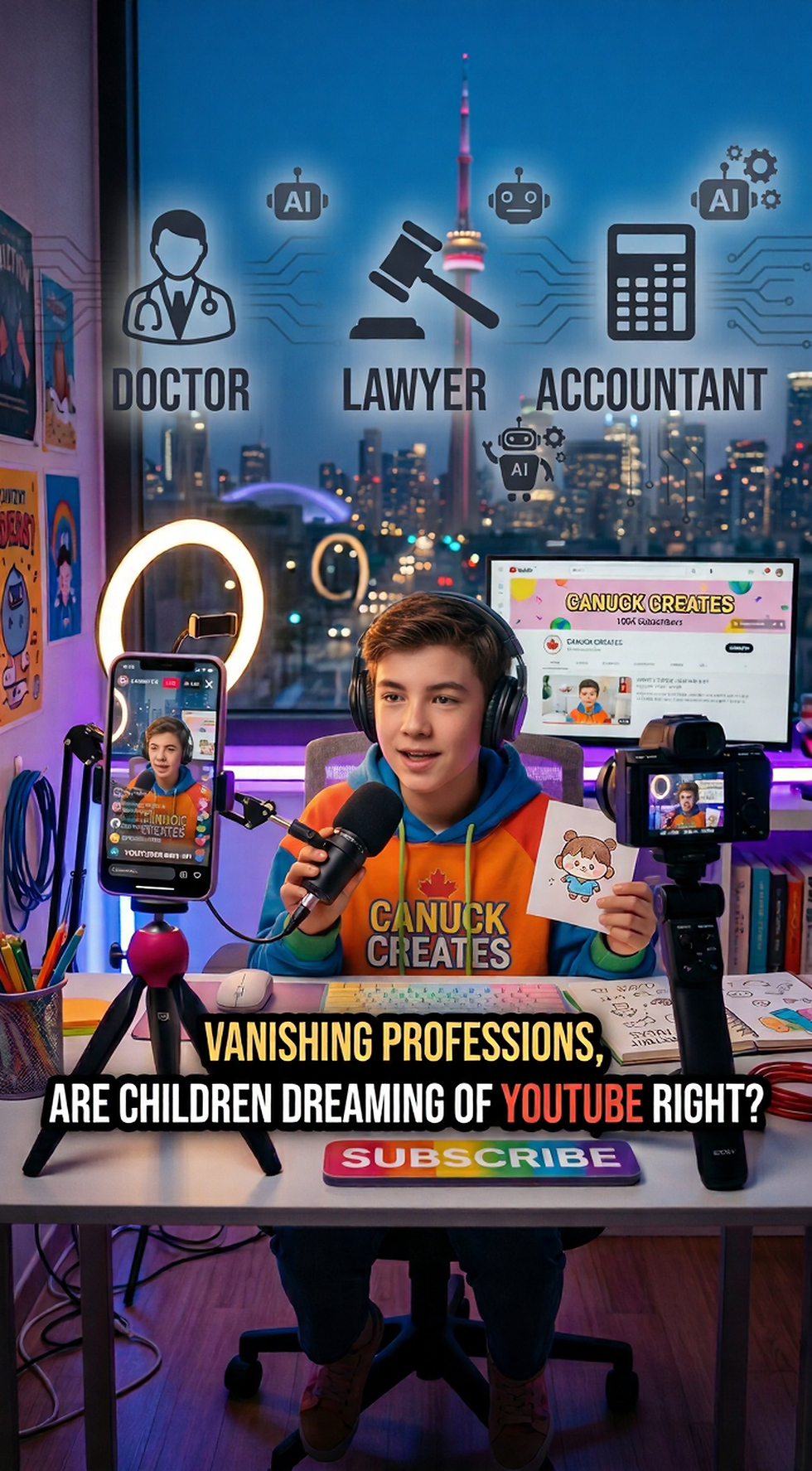
Meeting with students and parents in the educational field, the first thing I notice is the difference in speed between generations. The world changes rapidly, but the standards held by adults move much more slowly. At one point, when a child said, "I want to be a YouTuber," many parents were immediately filled with concern. They shook their heads, wondering if the child was just trying to avoid studying or if they were simply out of touch with reality.
However, the statistics tell a completely different story. According to a survey by the Ministry of Education and the Korea Research Institute for Vocational Education and Training, "creators" entered the top 10 most desired jobs for elementary school students for the first time in 2018, ranking 5th. Since 2019, they have consistently outranked doctors. The children weren't just following a fad; they were instinctively reading the changing structure of the world.
I realized this myself while producing YouTube content. This is by no means a light hobby. It requires immense practice to analyze trends, plan themes that capture the audience's interest, write logical scripts, and deliver them persuasively in front of a camera. Filming and editing are just the basics; one must also decide on thumbnail designs, titles, descriptions, tag settings for algorithms, and even advertising strategies. A single person becomes a planner, writer, director, presenter, editor, and marketer all at once. The results are coldly evaluated by numbers: views, subscriber counts, and retention time.
Going through this process makes one thing clear: we are no longer in an era where mastery of a single functional field guarantees stability. The ability to use AI tools proficiently, read data and trends, and sensitively understand human psychological responses has become the real competitive edge. The "stable professions" we have long revered—doctors, lawyers, and accountants—are also now within the sphere of influence of automation and artificial intelligence. How one reorganizes, connects, and delivers knowledge has become more important than the knowledge itself.
So, I sometimes think: perhaps the children who dreamed of being YouTubers were actually the most realistic of us all. They didn't just want to be famous; they were dreaming of becoming their own brand, creating their own content, and finding ways to connect directly with the world.
There is a saying: "To be successful, you must pursue a job your parents don't know." While it may sound provocative, it contains a vital insight. Opportunities have always opened up in new territories, and the leaders of the next generation have often emerged from fields unfamiliar to the previous one.
Just because a child's dream is unfamiliar, we should not take it lightly or draw boundaries in advance. If a child is deeply immersed in something—whether it is gaming, video production, coding, or dance—we must respect that process of immersion. Within that experience, problem-solving skills, self-expression, execution, and the resilience to endure failure grow. Whatever profession they choose in the future, those assets will undoubtedly be used.
The sparkling eyes of our children might not be a trend, but a signal. The future is already starting from their side. Our job is not to measure their potential, but to support them so they can experiment to their heart's content within a safe boundary.
Ultimately, no one knows what a child's dream will become. However, one thing is certain: the experience of digging deep into something they love will one day be reborn as that child's most powerful weapon.

Comments